
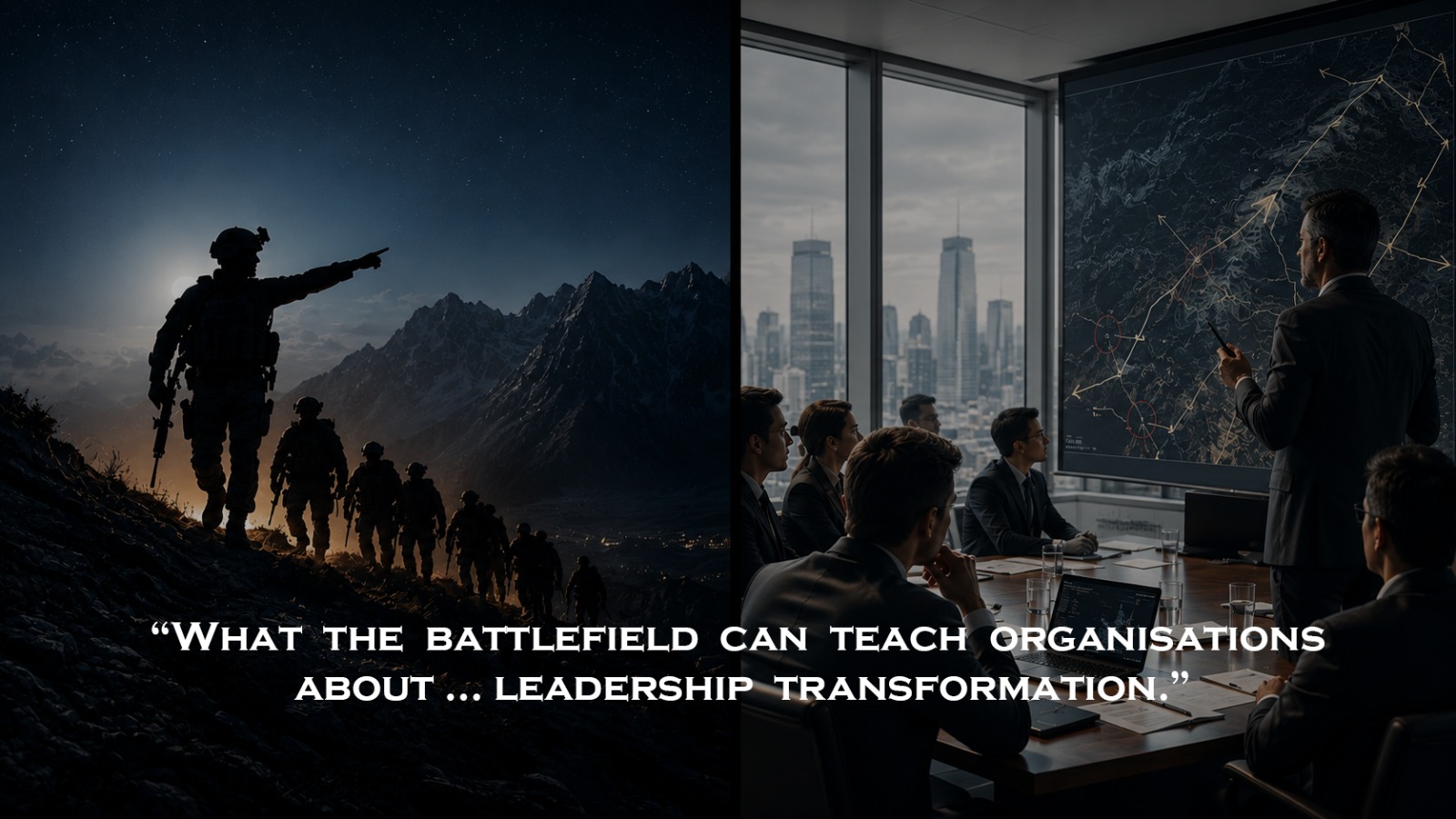
In the world of business, leadership is often discussed in conference rooms, management books, and corporate workshops. But some of the greatest Leadership Lessons are not born in comfort. They emerge in moments of uncertainty, pressure, sacrifice, and impossible odds.
The Kargil War of 1999 was one such defining chapter in India’s history. Fought in the harshest terrain, under extreme weather conditions, and against heavily fortified enemy positions, the war tested not just military strength, but human endurance, decision-making, teamwork, and leadership at every level.
What makes the Kargil experience so relevant to organisations today is that the battlefield and the boardroom are not as different as they appear. Businesses too face uncertainty, competition, pressure, resource constraints, and the challenge of keeping teams motivated during difficult times.
The difference between survival and success often depends on leadership
Here are 10 timeless leadership lessons from the Kargil War that can inspire true Leadership Transformation in organisations.
Mission Above Self
One of the strongest values displayed during the Kargil War was the ability of soldiers to place the mission above personal comfort and fear.
Great organisations are built when individuals align themselves with a larger purpose. Teams perform exceptionally when they stop asking, “What do I gain?” and start asking, “How do we achieve the mission together?”
Purpose-driven leadership creates extraordinary commitment.
Leadership Means Leading from the Front
During the war, officers led their troops from the front despite life-threatening conditions. Leadership was demonstrated through action, not designation.
In organisations too, employees do not follow titles; they follow conviction, integrity, and example. During crises, teams look for leaders who remain visible, accountable, and calm under pressure.
A leader who stands with the team earns trust for life.
Adaptability Wins Battles
The terrain during the Kargil War was unpredictable and extremely hostile. Strategies had to change quickly according to circumstances.
Similarly, businesses today operate in rapidly changing markets. Leaders who remain rigid often struggle, while adaptable leaders innovate, respond faster, and guide teams through uncertainty.
Adaptability is no longer optional; it is a survival skill.
Communication Saves Lives
In warfare, lack of communication can cost lives. Clear coordination between infantry, artillery, intelligence, and command units was essential for success.
The same applies to organisations. Miscommunication creates confusion, delays, mistrust, and inefficiency.
Strong leaders ensure clarity:
- Clear goals
- Clear responsibilities
- Clear expectations
When communication improves, performance improves.
Teamwork is the Ultimate Force Multiplier
No peak during the Kargil War was captured by individual heroism alone. Victory came through collective effort, coordination, and mutual trust.
The best organisations are not driven by stars alone; they are driven by strong teams that collaborate under pressure.
A culture of teamwork creates resilience and sustainable growth.
Courage is Taking Action Despite Fear
Courage does not mean absence of fear. It means moving forward despite fear.
In organisations, leaders often face difficult decisions – layoffs, restructuring, market failures, or high-risk opportunities. Avoiding decisions weakens organisations.
The Kargil experience teaches us that courageous leadership inspires confidence and momentum.
Sometimes the bravest thing a leader can do is take responsibility.
Preparation Determines Performance
The Indian Armed Forces train relentlessly before entering battle. Preparation creates confidence under pressure.
Similarly, successful organisations prepare continuously:
- Skill development
- Leadership training
- Scenario planning
- Emotional resilience
When challenges arise, prepared teams respond with discipline instead of panic.
Preparation reduces fear and increases execution excellence.
Emotional Resilience is a Leadership Strength
The Kargil War demanded extraordinary mental and emotional resilience from soldiers who fought under extreme hardship.
Corporate leaders too operate in high-pressure environments. Targets, uncertainty, competition, and constant change can exhaust teams emotionally.
Leaders who build emotional resilience within teams create stronger workplaces with higher trust, motivation, and long-term performance.
Resilient teams recover faster from setbacks.
Trust is Earned Through Integrity
On the battlefield, trust is non-negotiable. Soldiers trust their leaders because decisions are made with integrity and responsibility.
In organisations, trust is built when leaders:
- Keep promises
- Respect people
- Take accountability
- Remain transparent
Employees may work for salaries, but they commit to leaders they trust.
Integrity creates influence far greater than authority.
True Leadership Creates Legacy
The heroes of the Kargil War are remembered not because they sought recognition, but because they served a cause larger than themselves.
Great leaders in organisations also leave behind more than profits. They create culture, values, confidence, and inspiration that continue long after they move on.
Leadership is not about managing people.
It is about transforming people.
And that is the foundation of true Leadership Transformation.
Why Organisations Need Leadership Lessons from the Kargil War
Today’s organisations are searching for more than motivation. They are searching for authenticity, resilience, ownership, and purpose-driven leadership.
This is why lessons from the Kargil War resonate so deeply in corporate environments. They are real, tested under extreme adversity, and rooted in discipline, courage, teamwork, and commitment.
When employees hear leadership principles from someone who has lived them in life-and-death situations, the impact becomes unforgettable.
That is where the experience of a Kargil War Hero or a Kargil War Veteran becomes transformational for organisations.
Captain Akhilesh Saxena, a decorated Kargil War Veteran, led critical artillery fire plans during the war and sustained severe injuries while serving on the frontlines. His journey from the battlefield to the corporate world brings together two powerful dimensions of leadership-military courage and business understanding.
Today, through leadership sessions, keynote talks, and corporate workshops, Captain Akhilesh Saxena shares practical insights on resilience, ownership, teamwork, decision-making under pressure, and purpose-driven leadership.
Because leadership is not learned only in books.
Sometimes, the greatest lessons come from those who stood on the battlefield, faced impossible odds, and still chose to move forward for the nation, for the mission, and for their team.
By
Shikha Akhilesh Saxena